
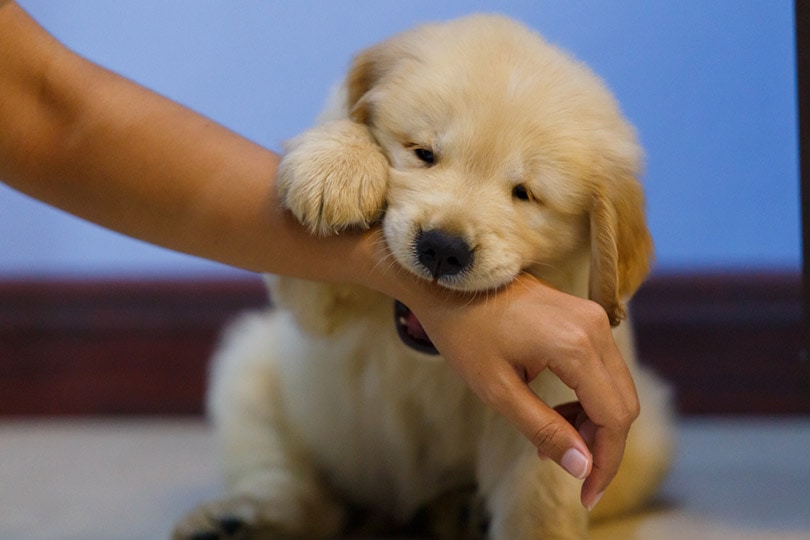
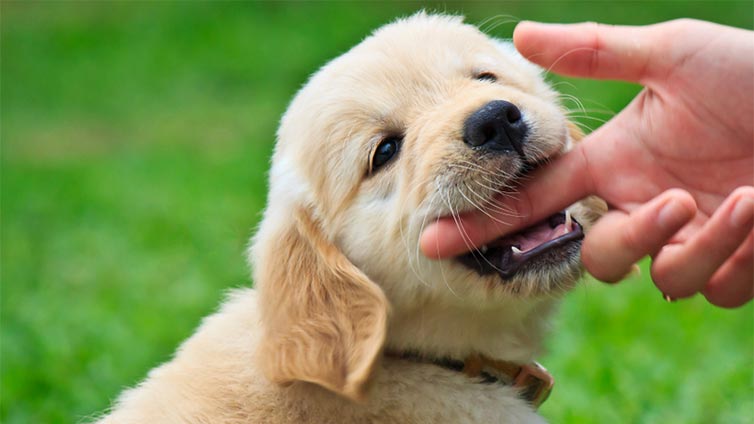
You reach down to give your puppy a cuddle. Next thing you know — tiny teeth are sinking into your fingers like you’re a chew toy 🙂
Sound familiar? Those little bites might seem cute at first. But left unchecked, puppy biting can quickly become painful, frustrating, and a habit that’s hard to break.
The good news? This is one of the most fixable puppy behaviours there is. You just need to understand why it’s happening — and know exactly what to do about it.
Why Do Puppies Bite in the First Place?
Before anything else, know this: your puppy is not being aggressive. Biting is completely natural puppy behaviour, and it serves a purpose.
Here’s what’s really going on:
- They’re exploring the world — puppies use their mouths the way toddlers use their hands. Everything goes in.
- They’re teething — between 3 and 6 months, new teeth are pushing through and their gums ache. Chewing brings relief.
- They’re playing — in the litter, puppies tumble and bite each other all day. It’s how they interact. They don’t yet know that human skin is much more sensitive than a sibling’s thick fur.
- They’re overstimulated or overtired — a puppy that’s had too much excitement will often get bitey and frantic. Think of it like a toddler meltdown.
⚠️ One important note: If the biting is accompanied by growling, stiff body language, or happens unprovoked, speak to a professional dog trainer or vet. True aggression in puppies is rare but worth ruling out.
Understanding “Bite Inhibition” — The Foundation of Everything
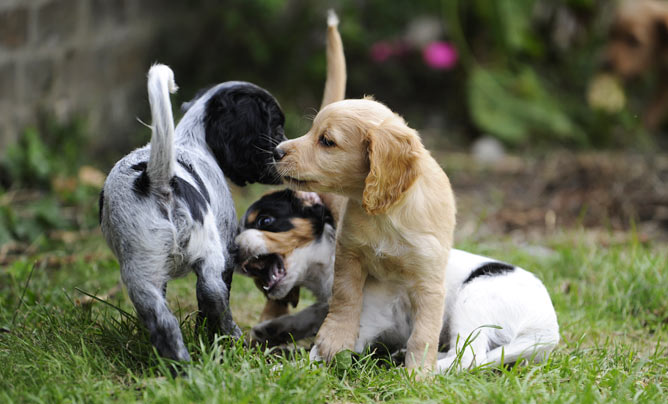
Before you try to stop biting entirely, there’s a concept every puppy owner needs to understand: bite inhibition.
Bite inhibition is your puppy learning to control the pressure of their bite — understanding that biting hard hurts, and soft mouthing is acceptable during play.
In the wild, puppies learn this from their littermates. When one puppy bites too hard during play, the other yelps and stops playing. The biter quickly learns: bite too hard = game over.
Your job is to teach this same lesson. The goal isn’t to stop all mouthing overnight — it’s to first teach gentle, then gradually teach none at all.
Skipping this step and going straight to zero tolerance too early can actually backfire — some puppies become more mouthy and frustrated if they feel overcorrected before they’ve understood the concept.
1. Teach Your Puppy That Biting Hard Ends the Fun
This is the most natural and effective first step — and it mimics exactly how puppies learn from each other.
Here’s what to do:
When your puppy bites hard, let out a clear, sharp “Ouch!” or “Ow!” in a high-pitched voice — not angry, just surprised. Then immediately:
- Go completely still (wriggling and pulling away excites them more)
- Turn your back or look away
- Ignore them for 10–20 seconds
- If they bite again, stand up and walk away entirely for 30 seconds
You are sending one clear message: biting hard makes the fun stop.
Be consistent. Every single person in the house needs to do this. One family member who laughs it off or lets it slide will undo everyone else’s hard work instantly.
Important: Don’t shout, yank your hand away dramatically, or push the puppy away. These reactions look like exciting play to a puppy — they’ll think you’re joining in and bite more.
2. Redirect to a Toy — Every Single Time
A puppy that’s biting your hands isn’t doing something wrong — they’re doing something normal, just aimed at the wrong target.
The solution isn’t to stop them from biting altogether (especially during teething). It’s to redirect that energy onto something they are allowed to bite.
How to do it:
- The moment your puppy lunges for your hand or foot, calmly pull away and immediately offer a toy or chew instead
- Keep toys in every room so you always have one within reach
- When they take the toy, praise them warmly — “Yes! Good boy!”
Over time, your puppy learns: hands are not for biting — but this rope toy? Absolutely fair game.
Best toys for bitey puppies:
| Toy Type | Why It Works |
|---|---|
| 🪢 Rope tug toys | Great for redirecting biting during play |
| 🦴 Rubber chew toys (like KONG) | Soothes teething gums |
| ❄️ Frozen wet cloth or frozen KONG | Amazing relief for teething pain |
| 🐾 Soft plush toys | Good for puppies that like to carry and mouth |
Pro Tip: If your puppy attacks your feet while you walk, keep a tug toy in your pocket. The moment they dive for your ankles, whip it out and drag it along the floor for them to chase. This works like magic.
3. Never Use Your Hands as Toys
This one is simple — but so many people accidentally do it.
Rough-housing with your puppy using your bare hands, wiggling your fingers in their face, letting them chase your feet for fun — all of this teaches them that hands and feet are exciting, bite-able things.
It feels harmless when they’re tiny. But you’re building a habit that will hurt (literally) once they’re bigger and stronger.
The rule is simple: Hands are for gentle stroking and giving treats. Toys are for playing and biting. Never mix the two.
4. Recognise When Your Puppy Is Overtired or Overstimulated
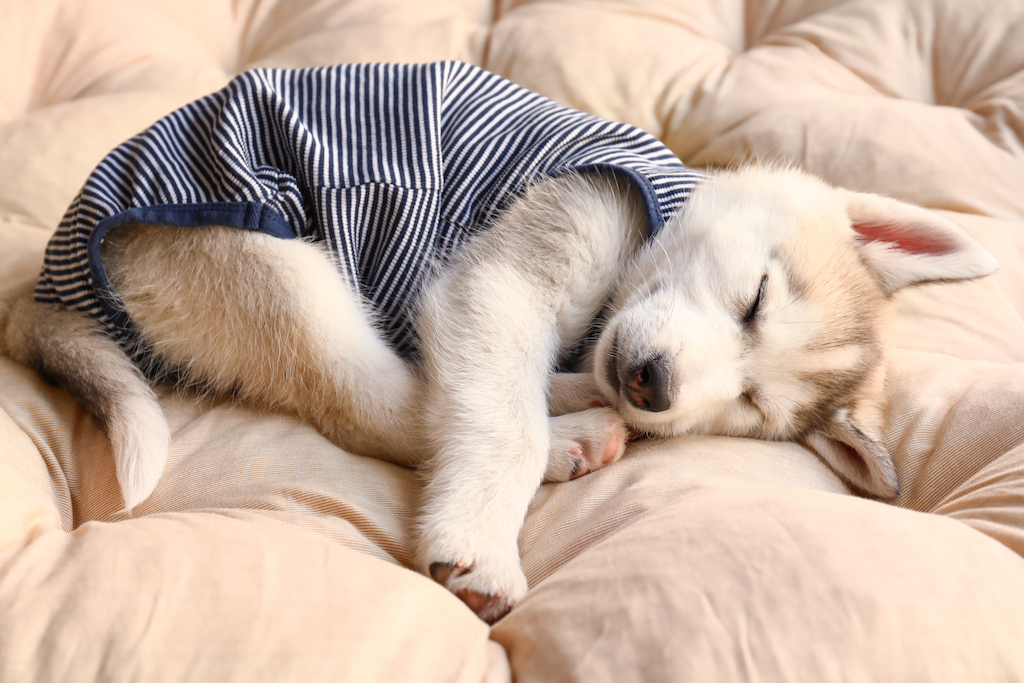
Here’s something that surprises most puppy owners: a lot of biting isn’t really about biting at all.
When puppies get overtired, overexcited, or overstimulated — they go into what owners often call the “zoomies” or the “witching hour.” They race around, eyes go wide, and they bite at everything — including you.
This isn’t defiance. It’s a puppy that’s hit their limit and doesn’t know how to wind down.
Signs your puppy is overstimulated:
- Biting much harder and more frantically than usual
- Won’t respond to any commands they normally know
- Racing around erratically
- Growling or barking during play (in an excited, frantic way)
What to do:
Don’t try to out-train a puppy in this state — it won’t work. Instead:
- Calmly put them in their crate or a quiet, calm space
- Give them a chew toy or frozen KONG
- Let them settle for 20–30 minutes
Nine times out of ten, they’ll fall asleep — and wake up as a completely different puppy. Prevention is even better: watch the clock and get your puppy settled before they hit that wall.
Puppy sleep needs: Young puppies need 16–18 hours of sleep a day. If yours is only napping sporadically and getting bitey in the evenings, they’re almost certainly overtired.
5.Teach “Leave It” and “Off”
Once your puppy has the basics, you can introduce simple commands that give you more control.
Teaching “Leave It”:
- Hold a treat in your closed fist
- Let your puppy sniff, lick, and paw at it — say nothing
- The moment they pull back or give up, say “Yes!” and reward with a different treat from your other hand
- Repeat until they back off quickly, then name it: “Leave it”
Gradually apply this to your hands — offer your hand, say “leave it,” and reward them for not mouthing.
Teaching “Off”:
- When your puppy jumps up and bites at you, calmly say “Off” and turn away
- The moment all four paws are on the floor, reward immediately
- Never push them down — that’s physical play to a puppy and makes things worse
6. Let Other Dogs Do Some of the Teaching
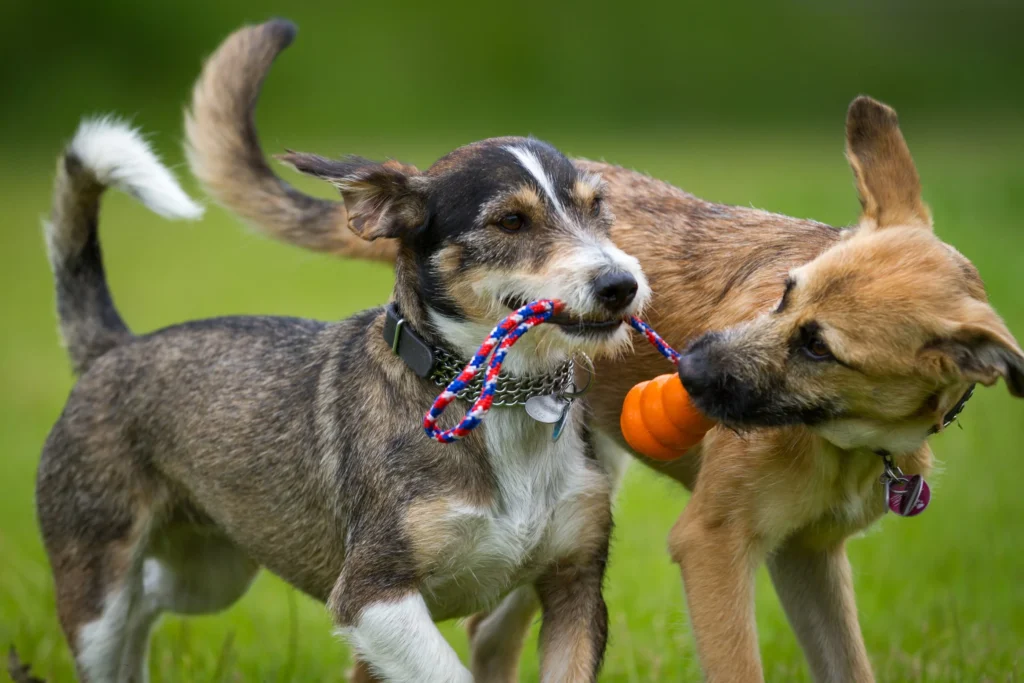
Here’s an often-overlooked secret weapon: other dogs.
No one teaches bite inhibition better than another well-socialised dog. When your puppy bites another dog too hard, that dog will yelp, growl, or simply walk away. The feedback is immediate, clear, and coming from someone your puppy actually respects.
Great ways to do this:
- Enrol in a puppy socialisation class — these are brilliant for bite inhibition as well as general confidence
- Arrange playdates with friendly, vaccinated adult dogs or puppies
- Visit a well-run puppy playgroup
Puppies who socialise regularly with other dogs during the critical window (before 16 weeks) almost always have softer mouths and better bite inhibition than those who don’t.
Things That Don’t Work (and Can Make It Worse)
Some common “advice” floating around on the internet can actually set you back significantly. Avoid these:
| ❌ What Not to Do | Why It Backfires |
|---|---|
| Tapping or smacking the nose | Creates fear and mistrust — and often increases biting |
| Holding the mouth shut | Frightening for a puppy, damages your bond |
| Alpha rolling (pinning them down) | Outdated, harmful, and can cause real aggression |
| Spraying with water | Confuses the puppy, doesn’t teach anything useful |
| Shouting “No!” repeatedly | Puppies don’t understand — it often just excites them more |
| Letting it slide “just this once” | Inconsistency is the number one thing that slows progress |
The most effective training is always calm, consistent, and kind. Punishment creates a nervous puppy — and nervous puppies bite more, not less.
A Simple Daily Routine to Reduce Biting
Structure goes a long way. A puppy with enough sleep, enough exercise, and enough mental stimulation is a much calmer, less bitey puppy.
A sample daily rhythm:
| Time | Activity |
|---|---|
| Morning | Short walk or garden play + training (5 mins) |
| Mid-morning | Nap (60–90 mins in crate) |
| Midday | Play session with toys + short training |
| Afternoon | Nap + chew time with a Kong or bone |
| Evening | Calm interaction, gentle play, wind down |
| Bedtime | Settle in crate with a chew |
Notice how much sleep is in there. That’s intentional — a tired puppy is a bitey puppy.
What If Nothing Seems to Be Working?
First — be patient. Real change takes weeks, not days. If you’ve been consistent for less than two weeks, keep going.
But if you’ve been at it for several weeks and the biting is getting worse rather than better, it’s time to bring in some extra help:
- A qualified puppy trainer (look for someone who uses positive reinforcement methods)
- Your vet — to rule out any pain or medical issue driving the behaviour
- A puppy class — group training is hugely valuable and lets your pup learn in a social environment
Most cases of puppy biting respond very well to consistent training. Genuine aggression in young puppies is rare — but if biting is intense, unprovoked, or accompanied by stiff body language and growling, don’t wait to get professional advice.
How Long Until It Stops?
Here’s an honest timeline:
- Within 1–2 weeks of consistent training, most puppies start biting noticeably less hard
- By 4–5 months, most are redirecting well and mouthing more gently
- By 6–7 months, as teething finishes, biting usually drops off dramatically on its own
- Full reliability — where nipping is rare — typically comes by 6–8 months
The speed depends almost entirely on how consistent everyone in the house is. One person undoing the training will double the timeline.
The Bottom Line
Puppy biting is normal. It is not a sign of a bad dog or bad ownership. It is a phase — and it will pass.
Your job is to guide your puppy through it with patience, consistency, and the right techniques:
- Yelp and stop play when biting is hard
- Redirect to toys every single time
- Never use your hands as toys
- Watch for overtiredness and settle them before they hit the wall
- Socialise with other dogs
- Keep everyone in the house on the same page
Do these things every day, and your bitey little pup will grow into a gentle, well-mannered dog you’re proud of. 🐶
 by Non Profit Supporters