
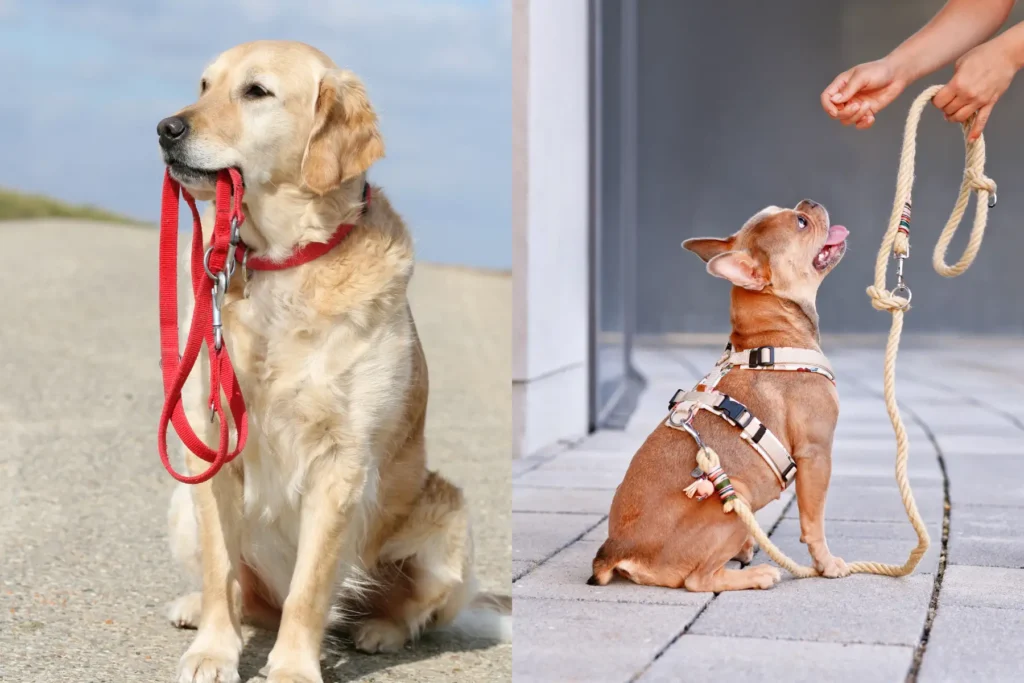
You clip on the lead, step outside — and suddenly your puppy is dragging you down the street like a tiny sled dog.
Every puppy owner knows this feeling. What should be a relaxing walk turns into an arm-wrestling match. But here’s the thing — your puppy isn’t trying to be difficult. They simply haven’t been taught how to walk on a lead yet.
The good news? Leash training is one of the most satisfying things to teach a puppy. With the right approach, most puppies go from chaotic pullers to calm walkers in just a few weeks.
Let’s get into it.
Why Do Puppies Pull on the Lead?
Understanding the why makes the training make sense.
Puppies pull for one very simple reason: it works. When they pull forward and you follow — even reluctantly — they learn that pulling = going where they want. Every single walk where pulling is rewarded (even unintentionally) reinforces the habit deeper.
Other reasons include:
- The world is overwhelmingly exciting — new smells, sounds, and sights are everywhere and they want to get to all of them now
- They have no idea what’s expected — nobody told them walking calmly beside you was even an option
- They have more energy than they know what to do with — especially high-energy breeds
- The lead itself feels strange — puppies that haven’t been introduced to a collar and lead properly will fight against the sensation
The core principle of all leash training: A tight lead never gets rewarded with forward movement. A loose lead always does. Once your puppy truly understands this, everything changes.
1. Introduce the Collar and Lead Before Any Walking Begins
Before you even think about walking, your puppy needs to be comfortable wearing a collar and lead. Skipping this step is why so many puppies freeze, panic, or throw themselves around when the lead goes on.
Introducing the collar:
- Put the collar on for just a few minutes at first — during mealtimes or play so they’re distracted
- Keep it loose enough to fit two fingers underneath, but snug enough it can’t slip over their head
- Most puppies forget it’s there within a day or two
- Build up wearing time gradually until they’re comfortable all day
Introducing the lead:
- Clip the lead on indoors and simply let it drag behind them while they move around
- Pick it up and hold it loosely — no tension, no directing, just getting them used to the feeling
- Reward calm behaviour with treats and praise
- Do this for several short sessions before ever attempting to walk anywhere
Never attach a lead to a collar and immediately head out onto a busy street. That first overwhelming experience can create a lasting negative association with the lead that takes weeks to undo.
Collar or Harness — Which is Better?
This is one of the most common questions new puppy owners ask — and the answer matters.
| Collar | Harness | |
|---|---|---|
| Best for | Calm walkers, ID tags | Puppies, pullers, flat-faced breeds |
| Risk of injury | Can strain the neck if puppy pulls hard | Much lower — distributes pressure across the chest |
| Control | Less control on a puller | More control, especially front-clip harnesses |
| Recommendation | Fine once lead trained | Best choice for training and young puppies |
For leash training specifically, a front-clip harness is highly recommended. When your puppy pulls, the front clip gently steers them back toward you rather than letting them power forward. It doesn’t punish — it simply makes pulling much less effective.
Avoid: Choke chains, prong collars, and slip leads on young puppies. These cause pain and fear — which creates anxiety around walks, not calm loose-lead walking.
2. Teach “Let’s Go” — The Foundation of Loose Lead Walking
Before you tackle a full walk, teach your puppy the concept of walking beside you in a calm, controlled way. Start this in the garden or indoors — not on a busy street.
Here’s how:
- Stand still with your puppy on the lead. Hold a treat at your hip on the side you want them to walk on
- Say “Let’s go” in a cheerful voice and take a few steps forward
- The moment your puppy moves with you and the lead is loose, say “Yes!” and give the treat
- Stop after just 5–10 steps at first — keep sessions short and successful
- Gradually build up the number of steps between rewards
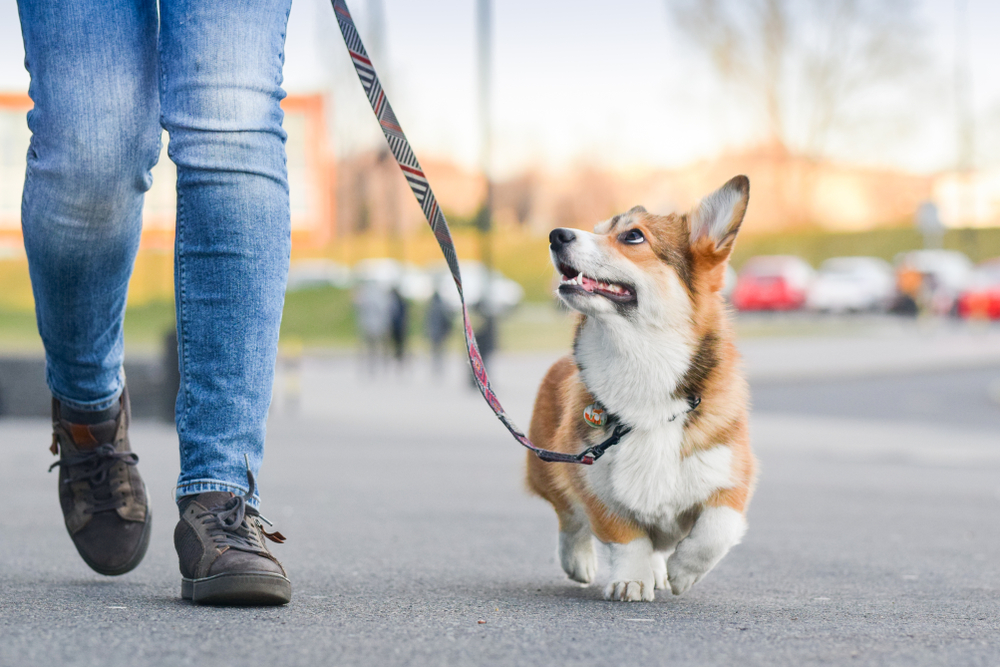
The position you’re aiming for: Your puppy walking alongside your leg, lead hanging in a relaxed U-shape, paying attention to you. It’s called the “J-shape lead” — if your lead looks like a J (gently curved, no tension), you’re winning.
Which side? Traditionally dogs walk on the left, but it doesn’t matter — just pick one side and be consistent. Switching sides constantly confuses your puppy.
3. The Stop-and-Wait Method — For When They Pull
This is the single most effective technique for stopping pulling — and it’s beautifully simple.
The rule: The moment the lead goes tight — you stop. Completely. Not a tug, not a correction. Just a full stop.
Step by step:
- Walk forward with your puppy
- The moment they pull and the lead tightens — plant your feet and stop moving
- Wait. Say nothing. Don’t pull back.
- Your puppy will eventually turn to look at you — wondering why you’ve stopped
- The moment they take even one step back toward you and the lead loosens — say “Yes!” and reward
- Walk forward again. Repeat every single time they pull.
It feels slow at first. Incredibly slow. Some early walks will barely cover any ground. But you are teaching your puppy the most important lesson of all: a tight lead = we go nowhere. A loose lead = we move forward.
Be patient. Most puppies begin to understand this within 5–7 sessions.
The change of direction method: Instead of stopping, some trainers prefer to simply turn and walk in the opposite direction the moment the puppy pulls. This works brilliantly for energetic puppies who get bored of standing still — and the unpredictability of direction keeps them watching you closely.
4. Make Yourself More Interesting Than the Environment
Here’s a truth most training guides don’t say clearly enough: if your puppy isn’t paying attention to you, no training technique will work.
A puppy that’s completely fixated on a smell, another dog, or a passing cyclist isn’t in a headspace to learn. Your job is to become the most interesting thing on the walk.
How to be interesting:
- Use high-value treats — not dry kibble. Think small pieces of chicken, cheese, or hot dog. Save these exclusively for walks so they feel special
- Talk to your puppy — a cheerful, animated voice keeps them checking in with you
- Be unpredictable — randomly change pace, suddenly turn, stop and ask for a sit. A puppy that never knows what you’ll do next watches you constantly
- Reward check-ins generously — every time your puppy looks up at you voluntarily during a walk, reward it. This behaviour — choosing to look at you — is worth its weight in gold
The “watch me” cue: Hold a treat to your nose, wait for your puppy to make eye contact, then say “Watch me” and reward. Practise this at home until it’s solid, then use it on walks when distractions appear. A puppy looking at your face cannot be pulling at the same time.
5. Manage Distractions Gradually
One of the biggest leash training mistakes is moving too fast, too soon — taking a puppy that’s just learning to walk nicely in the garden straight onto a busy road full of dogs, cyclists, and children.
Build up distractions slowly:
| Stage | Environment |
|---|---|
| 🟢 Week 1–2 | Indoors or quiet garden — minimal distractions |
| 🟡 Week 2–3 | Quiet residential street — low traffic, few people |
| 🟠 Week 3–4 | Slightly busier areas — other dogs at a distance |
| 🔴 Week 4+ | Busier environments — parks, town centres, markets |
Every time you increase the difficulty of the environment, your puppy’s ability to focus will temporarily drop. That’s completely normal — just go back to rewarding more frequently and keeping sessions short.
The 10-second rule: In a new or busier environment, reward your puppy every 10 seconds for staying beside you. As they settle and focus improves, gradually stretch the gap between rewards.
Don’t Forget — Sniffing is Important
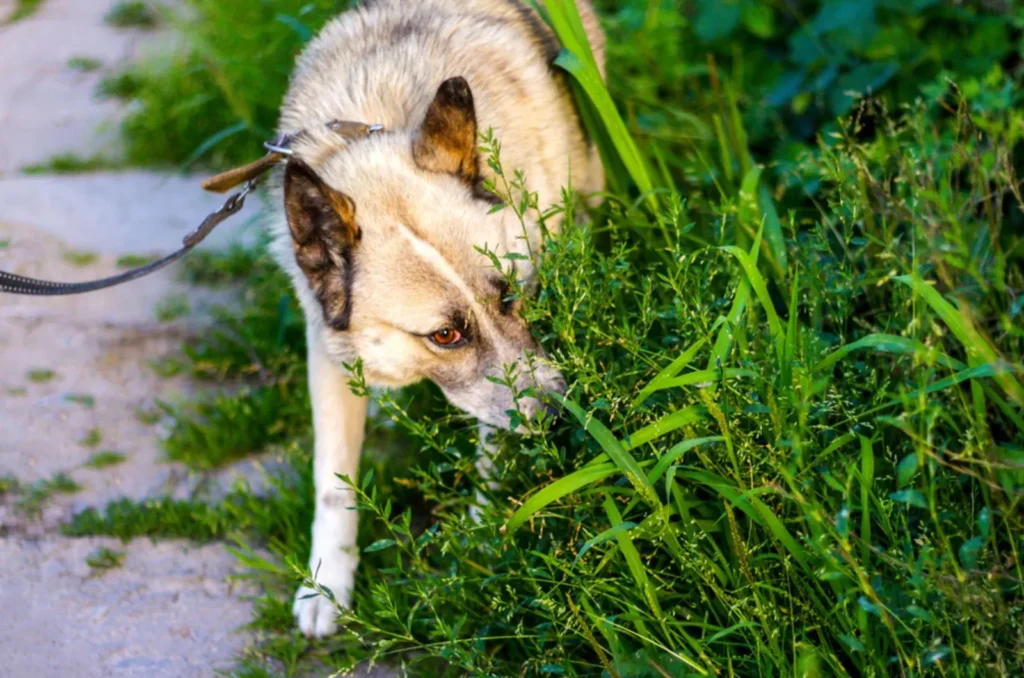
Here’s something that often gets overlooked: puppies need to sniff.
Sniffing is how dogs read the world. It’s mentally exhausting in the best possible way — 10 minutes of sniffing can tire a puppy out as much as 30 minutes of physical exercise. A walk where a puppy gets to sniff is a genuinely fulfilled puppy.
The key is teaching your puppy the difference between two modes:
- “Let’s go” — walking nicely beside you, focused, lead loose
- “Go sniff” (or “Free time”) — lead loosens, they can explore and sniff freely
Use a specific release word like “Go sniff” and let them potter about. Then say “Let’s go” to bring them back into walking mode.
This two-mode approach keeps walks enjoyable for your puppy without letting sniffing turn into constant pulling toward every lamppost and hedge.
Common Leash Training Mistakes to Avoid
| ❌ Mistake | ✅ What to Do Instead |
|---|---|
| Pulling the lead back when they pull | Stop walking — never match tension with tension |
| Using retractable leads during training | Use a fixed-length lead (1.2–1.8m) for consistency |
| Training in environments that are too distracting | Build up difficulty gradually — start quiet |
| Giving up after one or two bad walks | Expect slow progress early — consistency pays off |
| Letting pulling slide “just this once” | Every walk counts — be consistent every time |
| Repeating cues your puppy isn’t responding to | Go back a step — they may not be ready yet |
| Relying on equipment to do the training | Harnesses help — but they don’t replace teaching |
A Simple Leash Training Weekly Plan
| Week | Focus | Session Length |
|---|---|---|
| Week 1 | Collar and lead introduction indoors | 5 mins × 3 per day |
| Week 2 | “Let’s go” in garden — rewarding loose lead | 10 mins × 2 per day |
| Week 3 | Stop-and-wait on quiet streets | 15 mins × 2 per day |
| Week 4 | Change of direction, “watch me” cue | 20 mins × 2 per day |
| Week 5+ | Busier environments, longer walks | Build up gradually |
Keep sessions short and positive. Five brilliant minutes beats thirty frustrating ones every time.
What If My Puppy Refuses to Walk at All?
Some puppies don’t pull — they do the opposite. They plant their feet and refuse to move entirely.
This usually comes from fear or uncertainty rather than stubbornness. Never drag a frozen puppy forward — it makes the fear much worse.
Instead:
- Crouch down and encourage them warmly — never pull
- Toss treats slightly ahead of them to lure them forward
- Go back to a quieter, more familiar environment
- Shorten the walk and end on a positive note
- Build confidence gradually — even walking one house further than yesterday is progress
How Long Does Leash Training Take?
Here’s an honest answer:
- Within 1–2 weeks most puppies understand the concept of loose lead walking in a quiet environment
- Within 4–6 weeks of consistent training, most puppies are walking reasonably well on familiar routes
- Full reliability in all environments — including busy, distracting places — typically takes 3–6 months
The biggest variable? Consistency. A puppy walked correctly twice a day will progress twice as fast as one that’s only trained occasionally.
The Bottom Line
Leash training isn’t about dominance, force, or yanking your puppy into place. It’s about patiently teaching them one clear lesson:
A loose lead moves us forward. A tight lead stops everything.
Pair that lesson with high-value rewards, short focused sessions, and a gradual build-up of distractions — and you’ll have a puppy that walks beautifully beside you before you know it.
The early walks will be slow. Some days will feel like no progress at all. But stay consistent, keep it positive, and trust the process.
Before long, that chaotic little sled dog will be strolling calmly by your side — exactly where they belong. 🐶
 by Non Profit Supporters